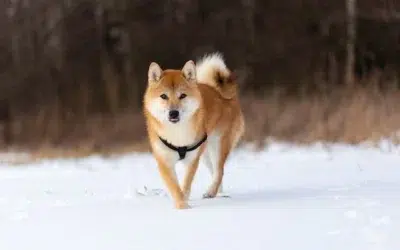
The Shiba Inu is a Japanese dog breed known for its unique personality, intelligence, and pride. While it is often considered a companion dog, some owners wonder if the Shiba Inu can also serve as a guard dog. In this article, we will examine the Shiba Inu’s characteristics as a guard dog, its strengths and limitations in this role, and the precautions to take.
Characteristics of the Shiba Inu as a Guard Dog
Shiba Inus naturally possess certain characteristics that could make them suitable for the role of a guard dog:
- Heightened Vigilance: The Shiba Inu’s natural vigilance is one of its most remarkable traits. They are constantly alert to their surroundings, ready to detect any anomalies. Whether it’s a suspicious noise outside or an unexpected visitor, they react quickly to alert their family. Example: If a stranger approaches the house, the Shiba Inu may respond by emitting sharp barks to signal someone’s presence.
- Distinctive Alert Barking: Shiba Inus’ barks are often characteristic, clear, and audible. They are not afraid to use their voice to alert their human pack to potential dangers. This ability to emit alert barks can be a valuable asset to warn owners of unusual situations. Example: If an unusual noise occurs at night, the Shiba Inu is likely to bark to report the source of the noise.
- Loyalty to the Family: Unconditional loyalty to their human family is another important trait of Shiba Inus. They are willing to defend their pack in the face of a threat, demonstrating a strong bond with those they consider their pack. Example: If a stranger attempts to enter the property, the Shiba Inu may position itself between the intruder and family members, ready to protect.
Limitations of the Shiba Inu as a Guard Dog
Shiba Inus are of small to medium size, which means they are not as imposing as some other guard dog breeds. Their small stature can make them less intimidating to intruders.
- Reduced Size: One of the primary challenges of the Shiba Inu as a guard dog lies in its relatively small size compared to larger guard dog breeds. This means they may not be as intimidating to intruders. Example: While a Shiba Inu can be intimidating through alert behavior, its small stature may be less impressive.
- Independence: The Shiba Inu’s pride and independence can also pose a challenge as a guard dog. They tend to make their own decisions and may not always obey commands in guard situations. Example: A Shiba Inu may choose to ignore a “stay” command if it is determined to pursue a potential threat.
- Mistrust of Strangers: Natural mistrust of strangers is a common trait in Shiba Inus. While this can be useful for detecting intruders, it can also be problematic when it comes to distinguishing friends from foes. Example: A Shiba Inu may bark at both a malicious stranger and a family friend attempting to visit.
Precautions to Take
- Socialization: Early socialization is crucial to help the Shiba Inu develop positive social skills. Expose them to a variety of people, animals, and situations from a young age to minimize excessive distrust of strangers.
- Obedience Training: Strong obedience training is essential to ensure that the Shiba Inu responds correctly to commands, especially in guard situations. Teach them basic commands such as “stay” and “stop” to maintain adequate control.
- Individual Evaluation: Each Shiba Inu has a unique personality. Before deciding to use them as a guard dog, individually assess their temperament to determine if they are suited for this specific role.
Conclusion
In conclusion, the Shiba Inu can potentially fulfill the role of a guard dog due to its natural characteristics such as vigilance, alert barking, and loyalty to the family. However, you should consider its limitations, including its small size, independence, and mistrust of strangers.
To succeed as a guard dog, a Shiba Inu should be properly socialized, well-trained, and individually evaluated to determine if they are suitable for this role. With appropriate precautions, a Shiba Inu can contribute to the security of your home while remaining a loving family member.