
What size is the Shiba Inu?
The Shiba Inu is a popular and charming Japanese dog breed. If you’re considering welcoming a Shiba Inu into your family, you might be wondering about the average size you can expect once they are fully grown.
In this article, we will explore the average size of a Shiba Inu and provide you with an idea of what to expect in terms of proportions.
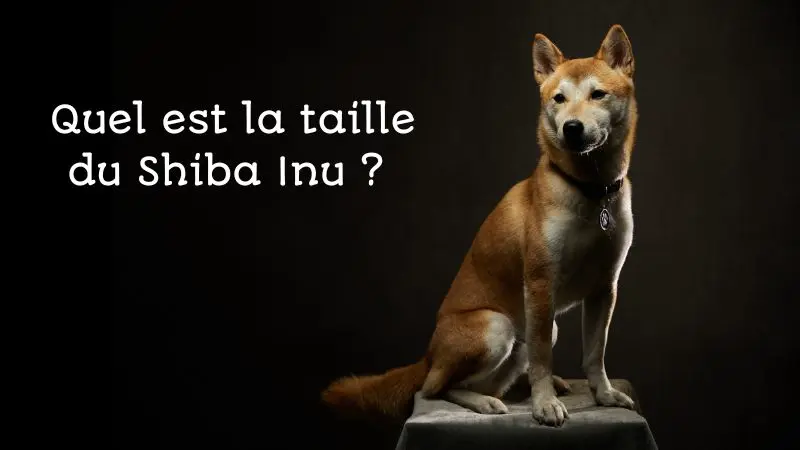
Are you considering adopting a Shiba Inu as your loyal companion? Choosing this breed is a wise decision. Their loyalty, playful temperament, and affection make them high-quality pets. But what about their average size? What should you expect in terms of adult size? I’ve spent some time researching this Japanese dog, and today, I’ll share everything I’ve discovered about their measurements and proportions.
What are the typical dimensions of Shiba Inus? In general, these Japanese canines have a height ranging from 30 to 43 centimeters (11.8 to 16.9 inches) and an average weight ranging from 7 to 11 kilograms (15.4 to 24.3 pounds). They tend to reach their adult size around 14 months of age, with males typically being slightly larger than their female counterparts.
They are classified as a small to medium-sized breed, being the smallest among the Japanese dog breeds.
The Shiba Inu is a popular dog often confused with other breeds, including Akitas, which can lead to misconceptions about their ultimate size.
The AKC (American Kennel Club) describes the Shiba Inu as a “small but solidly built” dog, reflecting its original breeding for hunting and working in the mountains of Japan.
So, it’s not surprising that these dogs are excessively energetic while displaying agility and vigilance.
Therefore, if you are seriously considering adopting this breed, you will need to take into account their exercise needs. This is particularly crucial if your outdoor space is limited, preventing them from stretching their legs and engaging in activities.
Due to their muscular build and relative robustness, leash training will also prove beneficial!
Now, let’s delve deeper into the average dimensions, weight, and build of our charming Shiba Inus, whether they are male or female. We will also look at some crucial aspects of their growth, including when they reach their adult size and the factors influencing their stature!
Height, Weight, and Average Size of a Shiba Inu
In general, males tend to be slightly larger than their female counterparts. They typically measure between 35 and 43 centimeters (13.8 to 16.9 inches) in height and weigh between 8 and 11 kilograms (17.6 to 24.3 pounds). On the other hand, our lovely female Shiba Inus are often a bit smaller. Their average height ranges from 33 to 38 centimeters (13 to 15 inches), with a weight of approximately 7 to 9 kilograms (15.4 to 19.8 pounds). Additionally, males and females of this breed have differences in their appearance. The males have a somewhat more rugged look without being coarse, while the females maintain their femininity while having a solid structure. It’s all about charm, you see! 😊Are Shiba Inus Small or Medium-Sized Dogs?
So, officially, the Shiba Inu is classified as a medium-sized dog, but one could also consider them small to medium-sized, depending on perspective, right? Indeed, the perception of a dog’s size is somewhat subjective. It also depends on your experience with other dog breeds. A Shiba Inu can seem giant next to a tiny Chihuahua and quite small in comparison to a robust German Shepherd. There can be some confusion in classifying Shiba Inus from time to time because they bear a striking resemblance to other Japanese dog breeds. In fact, the Shiba Inu may be the closest relative to Akitas. Although they look quite similar, they have notable differences, especially in terms of size. Akitas are significantly larger and outweigh Shibas once they reach adulthood.
Aiko & Lucas
In the car, off to Saint Gaudens, to get a Shiba Inu. That's where I first saw Aïko at a breeding place called "La maison du Shiba."
It was the beginning of an incredible adventure, and today, Aïko is a traveling Shiba: 🇫🇷 🇧🇪 🇨🇦
And no, it's not a joke!
I'm Lucas Fonseque, a digital nomad and SEO expert consultant. Besides work in my life, I have my Shiba Inu whom I love more than anything: Aïko 🦊 ❤️
How long does it take for a Shiba Inu to become an adult?
Shiba Inus are cool, and they should typically reach their adult size around 12 to 14 months of age. That’s relatively quick, isn’t it? However, it’s worth noting that this estimate can vary from one Shiba dog to another. Some may take a bit longer to reach their full size, while others might experience an initial growth spurt and then stop growing before reaching half their age. Now, let’s take a closer look at some typical growth rates for this breed:Male growth
| AGE | Weight – Low Average (kgs) | Weight – High Average (kgs) |
|---|---|---|
| 3 months | 3 | 4.5 |
| 4 months | 4 | 6 |
| 5 months | 5 | 7.2 |
| 6 months | 6 | 8 |
| 7 months | 6.8 | 8.5 |
| 8 months | 7.2 | 9 |
| 9 months | 7.5 | 9.5 |
| 10 months | 7.7 | 10 |
| 11 months | 8 | 10.5 |
| 12 months | 8 | 11 |
| 13 months | 8 | 11 |
| 14 months | 8 | 11 |
Female growth
| AGE | Weight – Low Average (kgs) | Weight – High Average (kgs) |
|---|---|---|
| 3 months | 2.5 | 3.5 |
| 4 months | 3.5 | 5 |
| 5 months | 4.5 | 6 |
| 6 months | 5 | 6.8 |
| 7 months | 6 | 7.2 |
| 8 months | 6 | 7.7 |
| 9 months | 6.5 | 8 |
| 10 months | 6.5 | 8 |
| 11 months | 7 | 8 |
| 12 months | 7.5 | 8.5 |
| 13 months | 7.5 | 8.5 |
| 14 months | 7.5 | 8.5 |
What factors contribute to the size of a Shiba Inu?
Not all Shiba Inus are the same when it comes to size. Of course, there can be some slight variations in weight among these adorable pups, but you may be surprised to learn that other notable differences can occur. Understanding precisely why your Shiba is significantly smaller (or larger) than expected can be a real puzzle, but there are several distinct factors to consider: 🐾The sex
It’s common to observe that male Shiba Inus generally have a slightly more imposing stature than their female counterparts.
While this doesn’t hold true for every individual, this trend often manifests on a broader scale.
So, don’t be surprised if your male Shiba ends up being larger in size than his four-legged sisters. It’s perfectly natural!
Genetic
In general, comparing the size of your lovely companion with that of their brothers, sisters, parents, or grandparents can give you an idea of what to expect.
If the whole canine family tends to be larger, there’s a good chance that your Shiba will follow the trend and be a few centimeters taller.
This principle can also apply to other characteristics, such as color, personality, or even predispositions to certain diseases.
When you consider talking to potential breeders, don’t hesitate to ask questions about the pedigree of these adorable furballs.
Just make sure to choose reputable breeders who are registered and practice legal and safe breeding methods. After all, your future four-legged friend deserves the best!
Breed
While genetics play a crucial role, the exact breed of your four-legged companion is an essential factor to consider.
Breeds give us an idea of what our loyal friend will look like, at least in appearance.
However, mixed breeds can bring some additional surprises, even though it seems quite straightforward for pure breeds.
Your puppy may look exactly like one of its parents, but it’s more common to get a unique blend of both.
You might have seen adorable pictures of German Shepherds with Corgi bodies or charming Golden Retrievers with pointy ears.
If your Shiba Inu is a mix, it can be a real mystery regarding its future appearance.
This is especially true if your companion comes from a shelter or rescue center, and their family history is unknown. You could be pleasantly surprised!
Inherited conditions
Even if you’re fortunate to welcome a purebred Shiba Inu into your home, it’s essential to keep in mind that even within these well-established lines, genetic mutations can occur, and they can impact the size of your adorable companion.
No breed is immune to these unexpected variations. For example, a Shiba Inu may sometimes be affected by what’s known as dwarfism, a genetic condition that results in a smaller size than the average for the breed.
Don’t let this worry you too much! Every Shiba, regardless of size, possesses its own unique charm. Ultimately, it’s their personality, unconditional love, and priceless moments you’ll share that will make your relationship extraordinary.
Health
While some health factors may not appear directly related to growth, they can still influence the size of your precious Shiba Inu.
It’s crucial to understand that if your Shiba doesn’t receive adequate nutrition, it could be reflected in their growth, or rather, lack of growth. The formative years of a Shiba’s life are crucial because it’s during this period that they need to develop their bones and muscles.
Sometimes, a lack of nutrition during this period or health issues that occurred in the early stages of life can have irreversible consequences. Therefore, it’s essential to ensure that your Shiba receives a balanced and nutrient-rich diet.
Furthermore, even if you provide your companion with a dream life, there may be things you can’t undo from before they came into your life.
This breed, while admirable, is unfortunately prone to certain conditions such as hip dysplasia and patellar luxation, which can lead to pain, swelling, and arthritis. All of this can naturally impact your dog’s overall health.
So, it’s fundamental to closely monitor these aspects from the early stages of your Shiba’s life and not hesitate to consult a veterinarian if you suspect any issues.
Keep in mind that your dog’s size is not the only indicator of their health. Maintaining an ideal weight is equally essential because excess weight can lead to various health problems, such as diabetes. This can affect your faithful companion’s physical and emotional health, potentially shortening their lifespan or making them irritable.
Therefore, ensure they maintain optimal weight, even if you take all the necessary measures, as issues may arise. Inability to lose weight can be a sign of a serious medical condition that requires treatment or other interventions.
If you have any doubts about your precious Shiba’s health, don’t hesitate to take them to your veterinarian, who can provide you with advice and care tailored to their specific needs. After all, the health and well-being of your faithful four-legged friend are paramount.
Individual differences
Each Shiba Inu is truly a one-of-a-kind individual.
There are differences in their physical and emotional characteristics that sometimes remain simply inexplicable. Just as we are not exact replicas of our parents or siblings, our four-legged friends are also their own unique beings. So, it’s unlikely that they’ll be a perfect copy of their parents.
It’s essential to remember that there are many influences, both biological and environmental, that are beyond our control. That’s why it’s so important to always be prepared to face the unexpected when welcoming a dog into our home. Ultimately, we can never predict with certainty how they will evolve.
That’s precisely what makes each Shiba Inu so special and endearing. Their individuality, surprises, and quirks are part of what makes them so unique and unforgettable in our lives. So, get ready to be amazed and to love your Shiba for all the wonderful surprises they have in store for you!


Subscribe and save 20% on your first order 🎁
What does the Shiba look like when it’s an adult?
Adult Shibas have a look that evokes a charming mix between a wolf and a fox. They have upright ears and a thick double coat that gives them an elegant yet cuddly appearance, somewhat like a teddy bear. What’s fascinating about adult Shiba Inus is that they don’t seem radically different from what they were as puppies. Generally, their coat color remains relatively consistent, although lighter or darker shades may appear from time to time. Most of them proudly sport the classic red hue with a white belly that makes them so recognizable. However, it’s not uncommon to see the darker coloring around their nose, ears, or eyebrows fade over time. Of course, there are various color variations, and you might even encounter black or entirely white Shibas. To get a rough idea of the color your adult Shiba might display, it can be wise to take a look at the color palette of their parents. As for their physical appearance, while their bodies develop more proportionally as adults, Shibas remain sturdy with a compact body and a thick neck. Their small ears confidently point towards the sky. Although some puppies may have floppy ears, most Shibas see their ears stand upright proudly in adulthood. Their fur retains its plush character but generally doesn’t become excessively long. In contrast, their tail becomes noticeably fluffier with a graceful curve at the tip, adding to their unique charm. Adult Shiba Inus exude a natural elegance that makes them irresistible in many ways. 🐕Conclusion
In summary, the Shiba Inu, this little treasure from Japan, is a truly unique dog breed. Often described in various ways, it falls into the category of medium-sized dogs according to the breed standard. Despite this, it doesn’t require the space that larger dogs do. The Shiba Inu skillfully combines athleticism and practicality, making it an ideal companion for a variety of activities, whether it’s a simple car ride or an outdoor adventure. These dogs have a sturdy constitution, which means that leash training and obedience are essential to fully enjoy their company. Socialization and training are crucial for this breed. With a strong personality and remarkable self-confidence, the Shiba Inu needs to feel that it has a responsible and loving owner by its side. In return, you’ll have a loyal and affectionate dog, ready to protect you thanks to its natural instinct of wariness towards strangers. They are, in short, invaluable companions to cherish and appreciate in our lives! 🐕❤️FAQ
Shiba Vs Spitz
Feeding Your Pup
Opt for high-quality kibble specifically formulated for your small-sized pet. Don’t let them eat your cat’s kibble! Feel free to consult our guide on nutrition and apartment living.
My Shiba is large and heavy... What should I do?
You should consider giving them more exercise and perhaps reducing their kibble intake. If you already feed them at specific times, you can also try providing unlimited kibble (as a test). Aiko eats larger quantities when he doesn’t have unlimited kibble because he’s afraid of running out.