
Akita VS Shiba Inu
Japanese dogs, such as the Akita Inu and Shiba Inu, capture the interest and affection of many animal lovers around the world.
These two breeds, originating from Japan, share striking similarities in their appearance, but they also have essential differences in terms of history, personality, and needs.
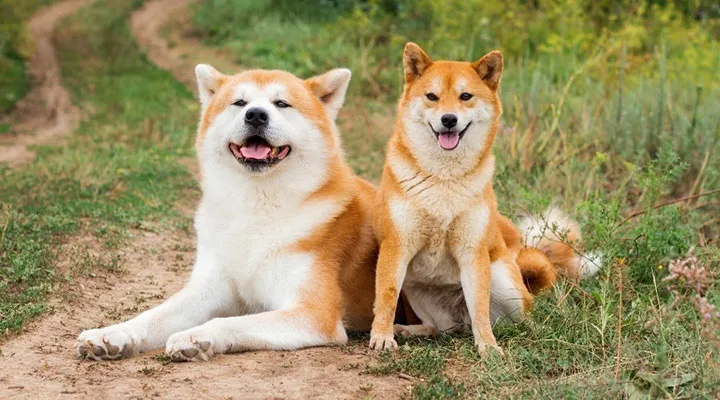
In this comprehensive guide, we will explore in detail the distinctions between the Akita Inu and the Shiba Inu, to help you make an informed decision if you are considering welcoming one of these dogs into your family.
Discover the fascinating history of these two breeds, their distinctive physical characteristics, their unique temperaments, their care needs, and much more. Whether you are a dog lover or thinking of adopting one of these breeds, this guide will provide valuable information to choose the canine companion that best suits your lifestyle.
Akita Inu or Shiba Inu – Which One is Better?
It’s essential to remember that neither of these breeds is better than the other. They each have their unique traits! But we’re here to help you choose the one that best fits your family and your home. Before diving headfirst into adopting a puppy, it’s a good idea to learn about their needs and personalities. So, let’s put on our glasses and dive into this guide to understand everything in detail!History and Origin of the Akita Inu and Shiba Inu
It’s cool to see that Akita Inu and Shiba Inu share a common history in Japan, but each has its unique story. Let’s take a closer look at how these origin stories differ and what these dogs were originally bred for. 🐾🇯🇵History of the Akita
The Akita has a truly impressive history! Originally, this breed descended from Matagi hunting dogs, experts in tracking large game such as bears, wild boars, and deer. They were true forces of nature, combining strength, courage, and imposing size. The Matagi are even considered one of the oldest indigenous breeds in Japan, which is super cool! But the Akita’s history doesn’t stop there. Other dog breeds also played a role in its development, including English Mastiffs, Great Danes, Saint Bernards, Tosa Inus, German Shepherds, and more. It’s a real canine melting pot! And we can’t forget the contribution of Helen Keller, who introduced the Akita to America in 1938 after receiving one as a gift during her visit to Japan. The Akita truly has a fascinating international history! 🌍History of the Shiba Inu
The history of the Shiba Inu is equally fascinating! This breed also originated in Japan, initially used for hunting in mountainous regions. Its history dates back to 300 BC. Originally, it hunted large game, but over time, it adapted to track smaller animals. In the 7th century AD, the Japanese Yamato court took measures to preserve indigenous dog breeds and established an office of dog keepers to achieve this goal. The Shiba Inu was one of these indigenous breeds cherished in Japanese culture. However, Shiba dogs went through tough times during World War II, even facing the risk of extinction. Fortunately, the Japanese government implemented a survival program that helped preserve the breed, with only three remaining bloodlines. It wasn’t until 1954 that the first Shiba Inu was registered in America. But the official recognition of the breed by breeding registries in the United States didn’t occur until the 1990s. It’s incredible to see how this breed has survived and thrived despite the challenges it faced! 🐕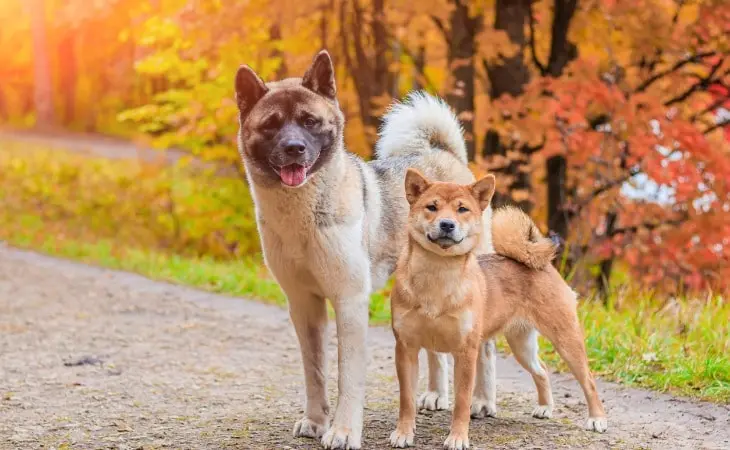
Akita & Shiba Inu: Funny Stories
There are indeed fascinating facts about these two dog breeds! The name “Shiba” in Japanese is associated with the red color of their coat and the brushwood of the mountains where they originally hunted. As for “Inu,” it simply means “dog,” which is why you sometimes hear the Akita referred to as “Akita Inu.” It’s a beautiful linguistic nuance that speaks volumes about their history. One touching story involves the Akita. In the 1920s, an Akita named Hachiko would accompany his owner to the train station every morning. After his owner’s passing, Hachiko continued to wait at the station for nine years until his own passing. He remained loyal to his owner, even when others tried to take him home or care for him. Hachiko’s incredible loyalty earned him a commemorative statue at Shibuya Station, a true testament to the emotional impact our four-legged friends can have on our lives! 🐾Appearance of the Akita and Shiba Inu
Of course, the appearance of our four-legged friends is important to many of us! Let’s take a look at how the Akita and Shiba distinguish themselves in terms of appearance. The Akita is an imposing and majestic dog with a powerful physique. It has a broad head, triangular upright ears, a fluffy tail curled over its back, and a dense, short coat. Akitas typically have a noble and determined expression that gives them a serious demeanor. On the other hand, the Shiba is smaller in size but equally charming. It has a wedge-shaped head, pointed upright ears, and a tail curled over its back. The Shiba has a shorter coat than the Akita and can have a lively and alert expression.Size
That’s true, when it comes to size, Akitas are definitely the “big brothers” of Shiba Inus!
Akitas are true giants in the canine world, reaching heights of up to 70 cm and weighing between 45 and 60 kg as adults. They are imposing and majestic.
On the other hand, Shiba Inus are much smaller, measuring up to 41 cm and weighing up to 11 pounds. They are cute and compact, making them perfect for smaller spaces.
However, it’s important to note that regardless of their size, both of these breeds have incredible personalities and are devoted companions!
Key features
These two breeds share many physical characteristics that make them both beautiful and captivating!
Akitas and Shibas have a strong and muscular build that reflects their strength and agility. Their triangular ears give them an alert look, and their pointed snouts add to their charm. You might notice that the Shiba has a slightly longer snout than the Akita.
Their fluffy coats and bright eyes give them an enchanting appearance, and the way their tails gracefully curl over their backs is a distinctive feature of both breeds. They are simply irresistible! 🐶
Coat colors
That’s true, their coat is an important consideration when choosing between an Akita and a Shiba Inu.
The Shiba Inu comes in a slightly more limited range of colors compared to the Akita. It can be red, black and tan, with white or cream markings on certain parts of its body, including the chest, belly, legs, face, and tail.
As for the Akita, the color variety is more extensive. Japanese Akitas can be red fawn, sesame, brindle, or white. American Akitas offer even more shades, including Pinto with large patches of color. This means you have a bit more color choices if you opt for an Akita. Each has its own charm!
Our Products for Shiba Fans
Are you a true enthusiast of adorable Shibas? So are we! That's why we've carefully curated a range of products designed to delight all lovers of this breed.
Discover below our selection of unique and high-quality products, perfect for showcasing your love for Shibas or spoiling your loyal four-legged companion.



Temperament of the Akita and Shiba Inu
Absolutely, temperament is essential in deciding which dog would best suit your family and lifestyle. So, let’s talk about the distinct personalities of the Akita Inu and the Shiba Inu:
The Temperament of the Akita
Hachiko’s story is a moving example of the unwavering loyalty of Akitas to their families. These dogs are known for their intelligence and courage. Their history as hunters showcases how determined and fearless they can be. As active dogs, Akitas require regular exercise and mental stimulation to be happy and balanced. They are also adept at guarding, making them excellent family protectors. You must respect their independent nature and educate them with patience and consistency. With proper care, an Akita can be a loyal and loving companion for a lifetime. 🐾The Temperament of the Shiba Inu
Shibas are indeed alert, bold, and loyal to their families. Their spirited personality can make them a lot of fun to live with. However, they have a pronounced independence and can be quite vocal, which may make them less suitable for owners seeking a calm and obedient dog. Understanding the temperament of the Shiba Inu and committing to early socialization and consistent training are essential to live harmoniously with this breed. With proper education and a suitable environment, a Shiba can become a loyal and lively companion. 💕Aggression and Guarding Instinct
Both the Akita and Shiba Inu breeds have well-developed hunting and guarding instincts due to their history as hunters and protective dogs. They can be wary of strangers approaching their family or home. However, early socialization is key to minimizing the risk of aggression in adulthood. By exposing your puppy to various situations, people, and environments from a young age, you will help reduce their guarding instincts and make them more comfortable in the presence of strangers. This will also help your dog become a well-balanced and sociable companion. Socialization is a crucial step in the education of these breeds and can greatly contribute to creating a harmonious relationship between you, your dog, and your environment. 🏡Video: Akita and Shiba Inu Differences
In this video, you will see the differences between these two adorable dogs:Akita vs Shiba Inu Training
Training is essential for all dog breeds, including the Akita and Shiba Inu. While they are intelligent, these dogs can sometimes have a tendency towards independence, which can make training a bit more challenging. Finding the right reward that motivates them is the key. Due to their strong natural instincts, it is advisable to walk these dogs on a leash when outdoors, even if they are well-trained. Socialization and training help them interact positively with other dogs and people, but caution is still necessary. For Akitas, especially due to their imposing size, investing time in their education and socialization is mandatory to teach them good manners and help them integrate harmoniously into society. A well-trained Akita can be a wonderful companion.Exercise for Akita and Shiba Inu
Both of these breeds require regular exercise to stay fit and happy. Their history as hunting dogs means they have a significant amount of energy to expend. However, Akitas, due to their large size, need to be handled with care when it comes to intense exercise, especially at a young age. Akitas require a moderate amount of exercise to maintain their health, but it is essential not to push them too hard, as it could put excessive strain on their still-developing joints. It’s best to wait until they reach full maturity before subjecting them to overly strenuous activities. As for Shibas, although they are smaller than Akitas, they are equally active and require a regular exercise routine. Leash walks are an excellent option to ensure their exercise while keeping them safe.Subscribe and save 20% on your first order 🎁
Akita Inu and Shiba Inu Health
Of course, it’s essential to consider the health of these dogs when contemplating adopting either of them. Let’s take a closer look at the health of the Akita Inu and Shiba Inu.Akita Inu Health
The health of the Akita Inu is a crucial aspect to consider if you are thinking of adopting this breed. Due to its large size, the Akita is predisposed to certain health issues. Here are some of the problems you should be aware of:- Hip and Elbow Dysplasia: This condition is characterized by malformed joints, which can lead to arthritis and pain.
- Progressive Retinal Atrophy: This is a degeneration of retinal cells that can eventually lead to blindness.
- Myasthenia Gravis: This autoimmune disease affects muscles and nerves, leading to muscle weakness and other health problems.
- Von Willebrand’s Disease: This is a clotting disorder that can cause excessive bleeding.
- Uveodermatologic Syndrome: This autoimmune disease can cause loss of skin pigmentation and eye inflammation.
- Gastric Dilatation-Volvulus: This is a serious condition where the stomach dilates excessively, which can lead to stomach torsion, a medical emergency.
Shiba Inu Health
Although the Shiba Inu is a small breed, it is not immune to certain potential health problems. Here are some of these issues to consider:- Allergies: Skin allergies are relatively common in Shiba Inus, leading to itching and skin irritations.
- Patellar Luxation: This is a problem where the kneecap dislocates, causing pain and discomfort.
- Hip Dysplasia: While less common in Shiba Inus than in larger breeds, hip dysplasia can still affect these dogs.
- GM1 Gangliosidosis: This is a hereditary disease that affects the brain and organs, although it is rare.
- Eye Disorders: Shiba Inus can be predisposed to eye problems such as glaucoma, a condition that can lead to vision loss.
Grooming needs
- Regular Brushing: Shiba Inus and Akitas require weekly brushing to keep their coats healthy and reduce shedding. During heavy shedding seasons, you may need to brush them more frequently.
- Occasional Baths: They generally don’t need frequent baths unless they are truly in need of cleaning. Too many baths can strip their skin of natural oils, leading to irritation.
- Ear Care: As you mentioned, it’s important to regularly check their ears to ensure there is no excess wax or dirt. Gently clean them if necessary to prevent infections.
- Nail Trimming: Keep an eye on the length of your dog’s nails and trim them as needed. Overly long nails can be uncomfortable for the dog and may also break.
- Teeth Brushing: Don’t overlook dental health. Brush your dog’s teeth regularly to prevent dental issues.

Aiko & Lucas
In the car, off to Saint Gaudens, to get a Shiba Inu. That's where I first saw Aïko at a breeding place called "La maison du Shiba."
It was the beginning of an incredible adventure, and today, Aïko is a traveling Shiba: 🇫🇷 🇧🇪 🇨🇦
And no, it's not a joke!
I'm Lucas Fonseque, a digital nomad and SEO expert consultant. Besides work in my life, I have my Shiba Inu whom I love more than anything: Aïko 🦊 ❤️
Akita and Shiba Inu Puppies
The choice of the breeder is crucial when considering adopting a puppy, whether it’s an Akita Inu or a Shiba Inu. Make sure to conduct thorough research to find a reputable breeder. If possible, visit the breeding facility in person to assess the living conditions of the puppies and their parents. Ask for references from other dog owners who have adopted from the same breeder. When speaking to the breeder, inquire about the puppies’ health, healthcare, health tests performed on the parents, and anything else that concerns you. Be prepared to answer questions about your home and your ability to care for a puppy. Be vigilant in identifying warning signs, such as an uncooperative breeder or poor living conditions for the dogs. Regarding costs, keep in mind that the initial purchase price is just a part of the expenses associated with dog ownership. The price of a Shiba or an Akita is similar, around $1,500. Healthcare, food, supplies, and other expenses must also be taken into account. Adopting a dog is a long-term commitment, so it’s essential to think carefully before making a decision.Shiba Inu vs. Akita Inu Reproduction
| Shiba Inu | Akita Inu | |
|---|---|---|
| Gestation Period | 60-64 days | 60-64 days |
| How Often Can They Breed? | Once a year. More frequent breeding is not healthy. | Once a year. More frequent breeding is not healthy. |
| Litter Size | 2-4 Shiba puppies | 3-12 Akita puppies |
Advantages and Disadvantages: Shiba Inu vs. Akita Inu
Here are some advantages and disadvantages for these two dog breeds:Avantages Shiba Inu
Avantages Akita Inu
Disadvantages of Shiba Inu
❌ Tendency towards Independence: Shiba Inus are known for their independence, which can make them occasionally stubborn when it comes to training.
❌ Suspicion of Strangers: They often have a natural suspicion of strangers, which can make them aloof with unknown individuals.
❌ Biting and Chewing: As mentioned earlier, they have a tendency to bite and chew, which can cause damage to the home.