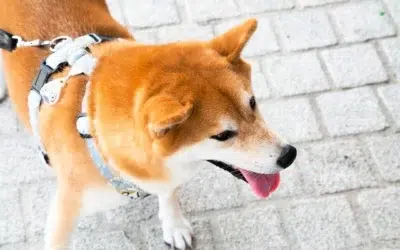
The Shiba Inu is a Japanese dog breed known for several distinctive features, one of the most recognizable being the curled shape of their tails.
This unique characteristic has sparked many questions and curiosity among dog lovers. In this article, we will explore the possible reasons behind this anatomical trait of Shiba Inus.
A Breed Characteristic
The curled tail, often described as a sickle-shaped tail, is a distinct feature of Shiba Inus. It’s important to note that this feature is not exclusive to Shiba Inus alone but is particularly pronounced in this breed. Other dog breeds such as Akita Inus and Hokkaido Inus may also have curled tails, though to a lesser extent.
Genetic Origins
The curled tail of Shiba Inus has deep genetic roots dating back centuries. This distinctive feature is the result of natural selection and selective breeding that have shaped the breed over time. Breeders may have noticed this trait in certain individuals and chosen to favor it in breeding to maintain it within the breed.
It’s interesting to note that other dog breeds like Akita Inus and Hokkaido Inus also share this curled tail feature, albeit to a lesser extent. This suggests that this characteristic may have common genetic origins in some Japanese breeds.
Historical Function
The history of the Shiba Inu as a hunting dog in Japan may provide clues about the function of its curled tail. Shiba Inus were used for tracking game in mountainous and forested environments. In such conditions, a curled tail could have offered a functional advantage.
Some experts speculate that the curled tail may have served to protect the Shiba Inu’s tail from injuries during hunting. Its reduced size may have minimized the risk of getting caught in bushes, underbrush, or rocks, allowing the dogs to pursue their prey with agility. This feature would have been a valuable asset for hunters.
Adaptation to Climate
The Japanese climate, characterized by harsh winters and frequent snowstorms in some regions, could also have played a role in the evolution of the Shiba Inu’s curled tail. A curled tail would have been less prone to snow and ice accumulation compared to a straight tail. This would have allowed the dogs to maintain their mobility and continue their activities even in cold weather.
Conclusion
The curled tail of Shiba Inus remains a fascinating mystery, but it is likely influenced by a combination of factors, including genetic origins, historical functions, and adaptations to the climate. Whatever the exact reason, this unique characteristic has become emblematic of the Shiba Inu breed and contributes to their distinctive charm.
It bears witness to the rich history and adaptability of this Japanese dog breed, which continues to captivate animal lovers around the world.